Materials do the talking
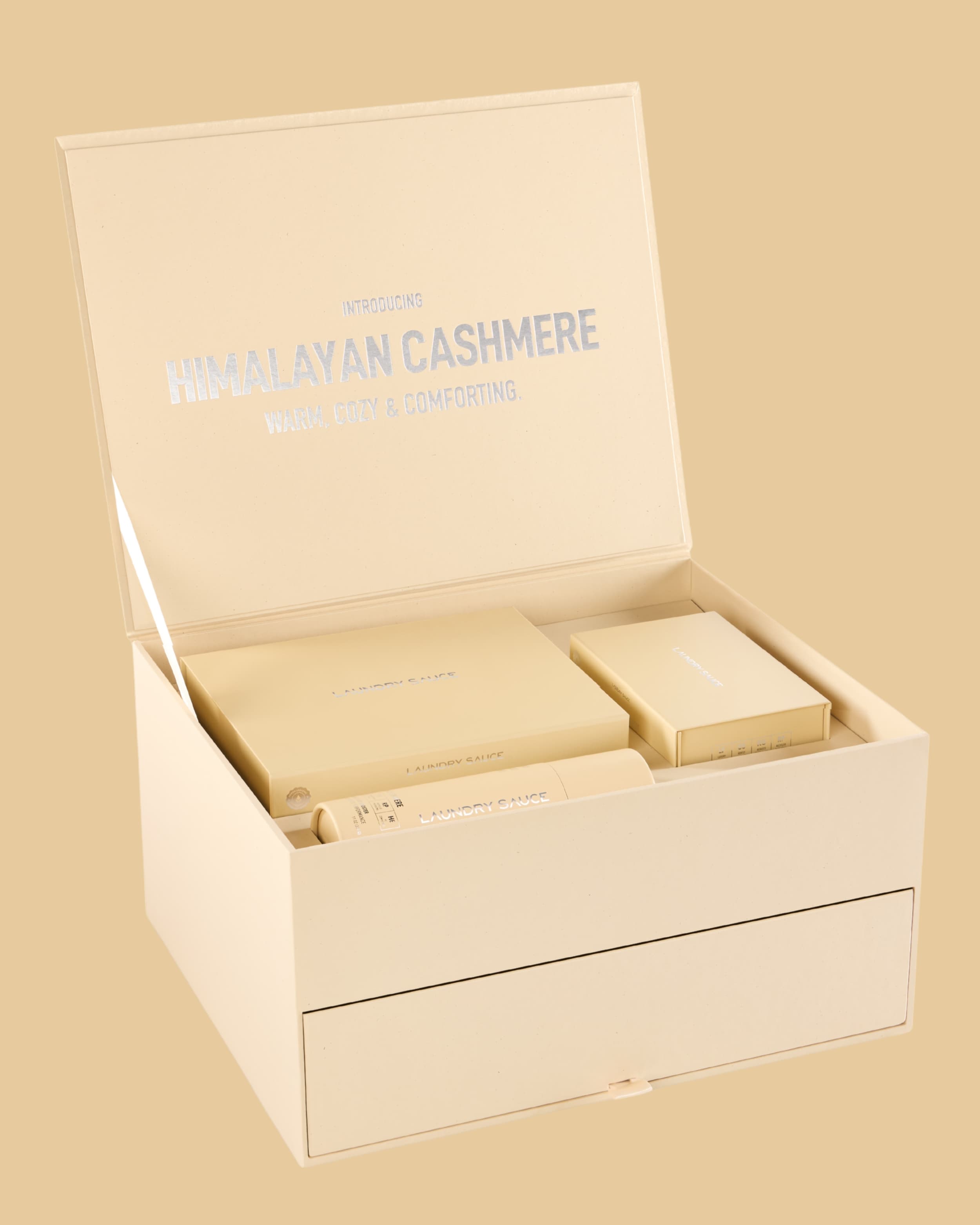
Before a recipient reads a word, they've already formed an impression—from the weight of the box, the texture of the wrap and the way the lid sounds when it lifts.
That's why material choices deserve as much attention as artwork. A soft-touch wrap and a textured uncoated stock can carry the same logo and communicate completely different things.
This guide walks through the materials and finishes used in premium packaging: what each one does, where it works best and what to watch for in production. For the thinking behind how we use them, see our approach to luxury packaging.
1. Papers and wraps
Everything starts with what the box is wrapped in.
- Custom printed wrapsThe most flexible option: any color, pattern or artwork, wrapped over board. Best when the design carries the brand and you want full control of the surface.
- Specialty papersColored, textured or uncoated stocks that bring their own character before anything is printed. They suit restrained designs where the material is the statement.
- Uncoated and tactile stocksMatte, warm and pleasant in the hand. They absorb ink differently than coated stocks, so colors read softer—worth sampling if the brand color has to be exact.
2. Laminates and coatings
A laminate is applied over printing, and it changes the feel of the surface as much as the look.
- Soft-touch laminationA velvety surface that changes how the box feels the instant it's picked up. It's the finish people most often describe as expensive.
- Matte laminationLow sheen, modern and easy to read. A good base for foil or spot UV, which stand out against it.
- Gloss laminationReflective and durable. It makes photography and color pop, and it holds up to handling well.
3. Foil, embossing and debossing
These are the finishes that add dimension—light, shadow and touch.
- Foil stampingMetallic or pigmented foil applied with heat and pressure. Precise and crisp, and it typically needs a die made for that artwork.
- EmbossingRaises an element off the surface, so the logo is felt as well as seen. Best on simple, bold shapes.
- DebossingPresses an element into the surface for a quieter, more tactile effect. Often the most restrained way to brand a box.
- Spot UVA glossy coating on selected areas. Most striking over a matte or soft-touch base, where the contrast does the work.
4. Fabric and texture
Texture is the finish people notice with their hands before their eyes.
- Fabric wraps and liningsCloth-covered board or lined interiors change both the look and the sound of opening a box. They suit keepsake packaging and high-value products.
- Textured papersLinen, felt and laid finishes add depth without adding a production step the way a laminate does.
5. Acrylic, wood and hardware
Sometimes paper and board aren't the whole story.
- Acrylic componentsLaser-cut panels, windows and lids that frame what's inside before the box is opened.
- Wood elementsBoxes, trays and details in wood, for weight and permanence.
- Metal hardwareMagnets, clasps, hinges and plates. Hardware adds components to source and install, and it changes how the package sounds and feels when it closes.
6. Interiors and ribbon
The inside of the box is the most underused surface in packaging.
- Printed interiorsOne of the most cost-effective ways to create a moment: the reveal happens when the lid comes up, not on the outside.
- Ribbon pulls and detailsA ribbon that lifts a tray turns removal into part of the choreography rather than an afterthought.
7. Combining finishes without overdoing it
Finishes work hardest in contrast. Foil reads brightest against matte. Spot UV needs a non-glossy base to register. An emboss is clearest when the surface around it is quiet.
Stack too many and they compete: the eye has nowhere to land, and the cost climbs with every added step. A useful test is to name the one thing you want someone to notice first, then ask whether each finish helps that or distracts from it.
8. Practical considerations
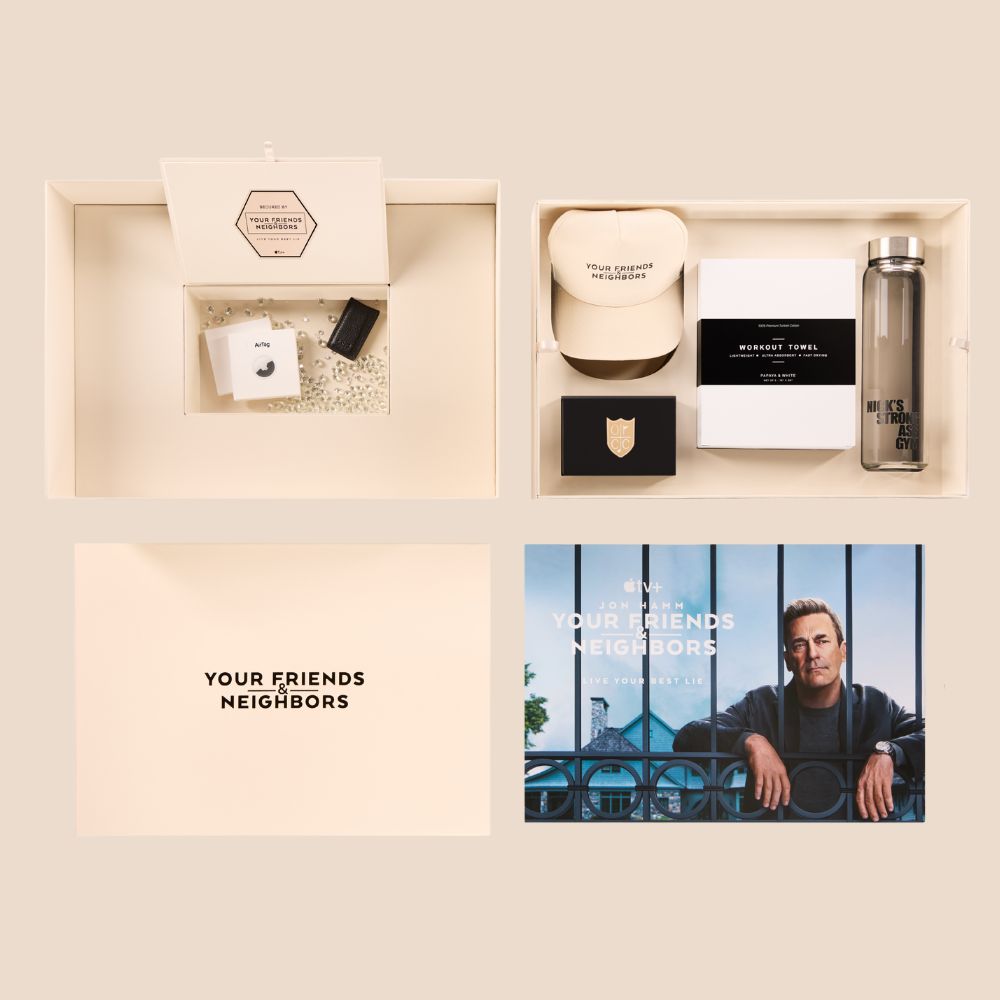
Materials behave differently once they leave the studio:
- Handling marksDark, matte and soft-touch surfaces show fingerprints more than lighter or textured stocks.
- Color accuracyUncoated and textured papers absorb ink differently, so a brand color can read softer than expected.
- Durability in transitWrapped corners can scuff, which is why presentation boxes often ship inside an outer carton.
- Lead timesSome specialty materials and components are ordered rather than stocked, which affects the schedule.
- PhotographyGloss reflects light and matte absorbs it—worth considering if the packaging will be shot by press or creators.
9. How to choose
- Start with the conceptThe materials should support the idea, not audition for attention.
- Pick one lead finishOne material or finish should carry the design. The rest supports it.
- Consider the whole journeyHow the box ships, who opens it and whether it will be filmed or kept.
- Design the interior tooThe inside is where the products live and where the reveal happens.
- Confirm before productionSamples and swatches resolve questions that a screen can't.
Finishes also affect the budget and the schedule in different ways—our guide to what custom packaging costs covers which ones add setup, tooling or production steps. And the structure comes first: see custom rigid boxes for how these materials are applied to a wrapped build.
When you're ready, tell us about the project and we'll recommend materials that fit the concept, the products and the budget.
Frequently asked questions
Which finish makes packaging feel the most premium?
There isn't one. A finish feels premium when it suits the concept and the material underneath it. Restraint usually reads as more considered than stacking several finishes on one box.
Do specialty finishes need their own tooling?
Some do. Foil stamping and embossing typically require a die made for that design, which is usually a one-time cost for that artwork.
Do dark soft-touch boxes really show fingerprints?
They can. Dark, matte and soft-touch surfaces show handling marks more readily than lighter or textured stocks, which is worth considering for packaging that will be handled on camera.
Can materials be tested before production?
Depending on the project, samples can be produced to evaluate construction and presentation, and material swatches can help confirm color and texture before artwork is finalized.
Are specialty papers more expensive than printed wraps?
Not always. Some specialty stocks cost more per sheet but need less printing, while a custom printed wrap may involve more setup. It depends on the design and the quantity.
Can different finishes be combined on one box?
Yes, and they often are—foil on an embossed logo, for example. The question is whether each one is doing a job, or just adding cost.